QUINEAR vs Opove Foot Massagers: Which Brand Fits You?
As an Amazon Associate we earn from qualifying purchases. Links on this page are affiliate links.
When you search for a QUINEAR vs opove foot massager, you will find two very different tools. Both brands focus on post-workout recovery and muscle relief. The main difference lies in how they deliver that relief. One uses air compression to squeeze your legs. The other uses percussion to strike your muscles. You need to choose the method that matches your recovery needs.
Key differences
| Aspect | QUINEAR QN-071A Black Leg Massager | Opove M3 Pro 2 Black Percussion Massager |
|---|---|---|
| Massage Technique | Air compression | Percussion |
| Coverage Area | Full leg (foot, calves, thigh) | not listed |
| Intensity Levels | 8 levels (50-120 mmHG) | 5 speeds |
| Massage Modes | 3 modes | not listed |
| Weight | 5.51 pounds | 2.4 pounds |
Which one should you choose?
Choose QUINEAR QN-071A Black Leg Massager if
- You want full-leg circulation improvement from foot to thigh
- You prefer gentle, squeezing pressure over deep impact
- You need adjustable compression intensity for sensitive muscles
Choose Opove M3 Pro 2 Black Percussion Massager if
- You seek targeted deep tissue relief for specific knots
- You value a lightweight tool for easy travel
- You want a high-RPM percussion massage for stiff muscles
Verdict: The QUINEAR QN-071A suits you if you need comprehensive leg circulation and gentle compression. The Opove M3 Pro 2 is better for you if you want portable, targeted deep tissue percussion. Your choice depends on whether you prefer squeezing pressure or striking impact.
QUINEAR vs Opove Recovery Specs
Massage mechanism
QUINEAR uses air compression to squeeze your legs. The QN-071A inflates four chambers in your foot, calves, and thigh. This sequential pressure improves blood flow. Opove uses percussion. The M3 Pro 2 delivers deep tissue strikes with a 12mm amplitude. It targets specific muscle groups with physical impact. You choose between gentle squeezing or intense pounding. The QUINEAR method covers a larger area at once. The Opove method focuses on precise, deep strikes. Your preference for pressure type determines which mechanism suits you better.
Intensity control
QUINEAR offers eight intensity levels ranging from 50 to 120 mmHG. You can adjust the pressure to fit your leg size and comfort. The device also includes three modes and a timer. Opove provides five speed settings with a maximum of 2500 RPM. It also features a 70lbs stall force for deep tissue work. QUINEAR gives you more granular control over compression pressure. Opove focuses on speed and force for muscle penetration. If you need adjustable air pressure, QUINEAR is better. If you prefer speed settings, Opove fits your needs.
Coverage area
The QUINEAR QN-071A covers your entire leg. It includes your foot, lower calf, upper calf, and thigh. This full-leg design helps with overall circulation and recovery. Opove is a handheld device. It targets specific areas you hold it against. You must move it manually to cover different muscles. QUINEAR provides consistent coverage without effort. Opove requires you to target each spot yourself. For comprehensive leg recovery, QUINEAR has the advantage. For spot treatment on shoulders or arms, Opove is more flexible.
Weight and portability
QUINEAR weighs 5.51 pounds. It comes with a carry bag for transport. The size is compact but still substantial. Opove weighs only 2.4 pounds. It is significantly lighter and easier to hold. The M3 Pro 2 fits easily into a small case. You can carry it for travel or gym use with less effort. QUINEAR is better for stationary recovery sessions. Opove is superior for on-the-go relief. If you prioritize lightweight portability, Opove is the clear choice. If you do not mind extra weight, QUINEAR works well.
Battery and power
Opove lists a battery life of 4 to 8 hours. This allows for extended use without recharging. The data for QUINEAR does not specify battery life or power source. We cannot confirm if it is corded or battery-operated. Opove provides a clear advantage in terms of known battery performance. You can rely on its long runtime for multiple sessions. Without specific data for QUINEAR, we cannot compare their power endurance. For guaranteed battery life, Opove is the safer option.
Choose the right recovery tool
Athletes needing full leg circulation
The QUINEAR QN-071A targets your entire leg. It uses four air chambers to sequentially compress your foot, calves, and thigh. This 50-120 mmHG pressure boosts blood flow and lymphatic function. You can choose from three modes and eight intensity levels. The 20 to 30-minute timer lets you set a precise recovery session. This is ideal for reducing soreness after running or cycling.
Users wanting deep muscle percussion
The Opove M3 Pro 2 delivers direct percussion. It has a 12mm amplitude for deep tissue massage. You get five speed settings reaching up to 2500 RPM. The 70lbs stall force ensures the motor does not stop under pressure. It weighs only 2.4 pounds, making it easy to carry. This tool is best for targeting specific tight muscles rather than full-leg circulation.
Travelers prioritizing portability and quiet
The Opove M3 Pro 2 is lighter and more compact. It weighs 2.4 pounds and fits in a carrying case. The hidden vents help dissipate heat and keep noise down. You can use it in a gym or office without disturbing others. The 4-8 hour battery life supports long trips. This makes it a practical choice for on-the-go recovery compared to bulkier air systems.
The products compared

QUINEAR QN-071A Black Leg Massager
Best for: adjustable air compression leg recovery
- Coverage Area
- Full leg
- Massage Techniques
- Air compression
- Intensity Levels
- 8 levels
- Massage Modes
- 3 modes
- Color
- Black
- Intended Use
- Circulation, Recovery
View on Amazon: QUINEAR QN-071A Black Leg Massager Affiliate link
This QUINEAR system uses air compression to massage the full leg, covering the foot, calves, and thigh. It offers 8 intensity levels from 50 to 120 mmHG and 3 modes. The device includes a digital controller with a 20 to 30-minute timer. It is designed for post-workout recovery and circulation improvement. The compact design fits well in a carry bag for travel or gym use.
Pros
- Full leg coverage including foot, calf, and thigh
- 8 adjustable intensity levels up to 120 mmHG
- 3 massage modes for varied therapy
- Digital controller with timer settings
Cons
- No heat function included
- Only one size option listed in data
- No app control mentioned
Good fit if
- You need deep compression for leg recovery
- You want adjustable pressure levels
- You prefer a portable recovery device
Skip if
- You require heat therapy
- You need multiple size options
- You want app connectivity
Verdict: QUINEAR QN-071A Air Compression Leg Massager fits athletes and active individuals who prioritize adjustable air compression for leg recovery. It delivers targeted pressure without heat or app features.
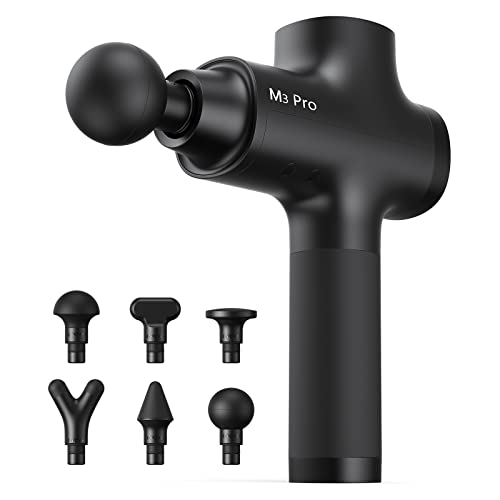
Opove M3 Pro 2 Black Percussion Massager
Best for: portable deep tissue recovery
- Massage Techniques
- Percussion
- Intensity Levels
- 5 speeds
- Color
- Black
- Intended Use
- Recovery
- Dimensions
- 9.88 × 6.92 × 2.8 inches
- Weight
- 2.6 pounds
View on Amazon: Opove M3 Pro 2 Black Percussion Massager Affiliate link
The Opove M3 Pro 2 is a black percussion massage gun designed for post-workout recovery. It delivers 12mm amplitude and reaches 2500 RPM across 5 speed levels. With a stall force of 70lbs and a 4-8 hour battery, it handles deep tissue work. The unit weighs 2.4 pounds and measures 9.88 inches long. It includes a carrying case for storage and travel.
Pros
- 12mm amplitude for deep tissue percussion
- 5 speed levels up to 2500 RPM
- 70lbs stall force for resistance
- 4-8 hour battery life
- Quiet operation with hidden vents
Cons
- Only 5 intensity levels available
- Single massage technique (percussion)
- No app or Bluetooth connectivity
Good fit if
- You want a portable recovery tool
- You need deep tissue percussion
- You prefer quiet operation
Skip if
- You require heat therapy
- You need app control
- You want multiple massage types
Verdict: Opove M3 Pro 2 Percussion Massager offers strong stall force and quiet performance for targeted recovery. It fits users who need reliable deep tissue work without complex features.
Specifications side by side
| Spec | QUINEAR QN-071A Black Leg Massager | Opove M3 Pro 2 Black Percussion Massager |
|---|---|---|
| Coverage Area | Full leg | not stated |
| Massage Techniques | Air compression | Percussion |
| Intensity Levels | 8 levels | 5 speeds |
| Massage Modes | 3 modes | not stated |
| Massage Technique | Air Compression | Percussion, Deep Tissue |
| Color | Black | Black |
| Intended Use | Circulation, Recovery | Recovery |
| Health Plan Eligibility | FSA Eligible, HSA Eligible | not stated |
| Dimensions | 7.32 × 5.79 × 2.36 inches | 9.88 × 6.92 × 2.8 inches |
| Weight | 5.51 pounds | 2.6 pounds |
| Size | Medium | 1 Count (Pack of 1) |
| Model | QN-071A | M3 Pro 2 |
Frequently asked questions
Which brand is better for leg circulation?
QUINEAR is the better choice for improving circulation. The QN-071A uses air compression to squeeze your legs. It targets the foot, calves, and thigh with sequential pressure. This method boosts blood flow and lymphatic function. Opove uses percussion, which focuses on deep tissue strikes rather than full-leg circulation support.
Does Opove provide heat or air compression?
No, the Opove M3 Pro 2 does not offer heat or air compression. It relies on percussion technology for deep tissue recovery. The QUINEAR QN-071A, however, uses air compression to deliver targeted pressure. It does not include heat features either. You get mechanical compression from QUINEAR and percussive strikes from Opove.
Which massager is lighter and more portable?
The Opove M3 Pro 2 is significantly lighter. It weighs 2.4 pounds, making it easy to carry. The QUINEAR QN-071A is heavier at 5.51 pounds. Opove is designed for portable deep tissue recovery. QUINEAR is a larger unit meant for leg recovery sessions at home.
Can I use these for post-workout recovery?
Yes, both brands fit post-workout recovery needs. Opove delivers strong stall force for targeted muscle relief. QUINEAR aids active individuals by improving circulation through air compression. One helps with deep tissue work, while the other supports recovery through sequential leg pressure. Choose based on whether you prefer percussive or compressive relief.
What is the difference in massage technique?
The main difference is the mechanism. QUINEAR uses air compression to inflate chambers around your leg. This squeezes muscles to aid recovery. Opove uses percussion to deliver deep tissue strikes. One method relies on pressure and inflation. The other relies on rapid mechanical impacts for muscle relief.
Which model covers more area on the body?
The QUINEAR QN-071A covers more area. It targets the foot, calves, and thigh with four air chambers. The Opove M3 Pro 2 is a handheld unit for targeted recovery. It focuses on specific spots rather than covering the entire leg. QUINEAR is better for full-leg treatment.
Is Opove suitable for deep tissue work?
Yes, Opove is suitable for deep tissue work. The M3 Pro 2 offers strong stall force and quiet performance. It is designed for reliable deep tissue strikes. QUINEAR focuses on circulation and recovery through air compression. If you need deep muscle penetration, Opove is the practical choice.
Do I need an app for these devices?
No, you do not need an app for either device. The QUINEAR QN-071A delivers targeted pressure without app features. The Opove M3 Pro 2 also operates without complex digital controls. Both brands focus on straightforward mechanical recovery. You can use them immediately without downloading software or connecting to Wi-Fi.